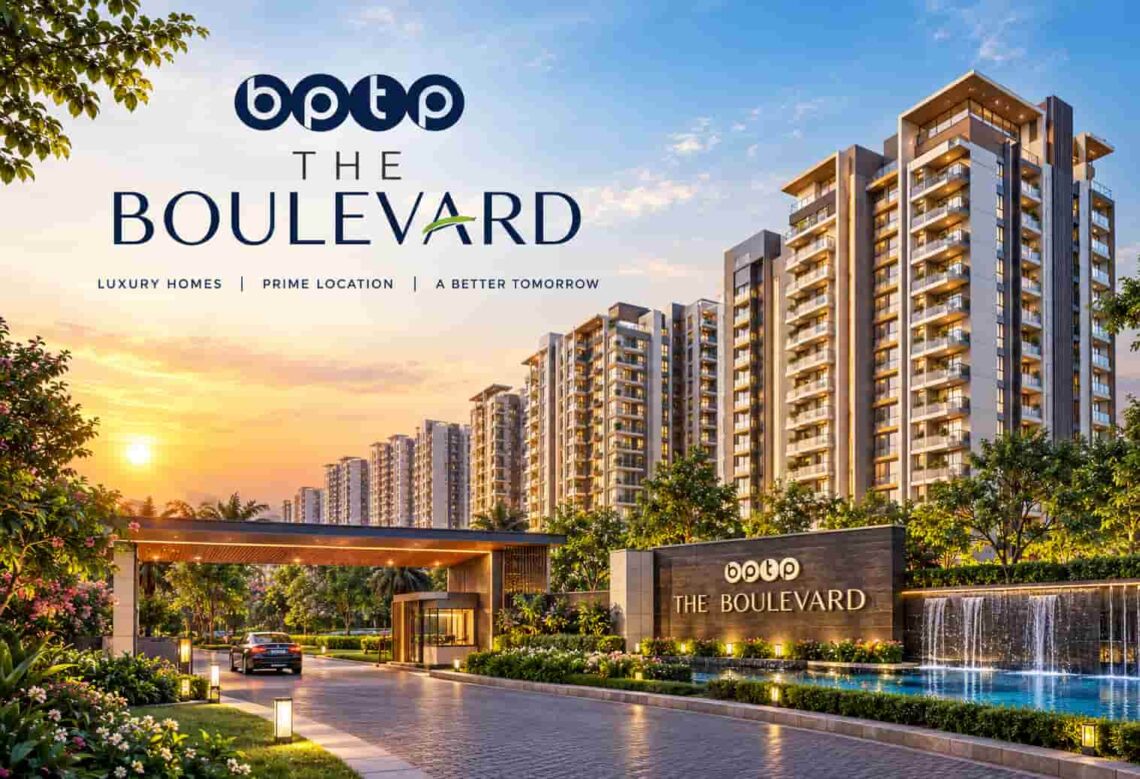
Retail real estate in Gurugram keeps changing, and high-street formats are getting more attention from investors than ever before. BPTP The Boulevard is one of the newer names in this space. It is a commercial high-street retail development in Sector 70A, Gurugram, planned by BPTP Limited on a large land parcel of 15.5625 acres.
The project offers only 29 retail units. That small number makes it interesting, because limited inventory usually means every unit gets a fair share of footfall and visibility. However, a good investment decision needs more than a catchy name. You need to know the location, the layout, the likely price range, the amenities and the legal status before you put your money on the table.
BPTP The Boulevard at a Glance
Before going into the details, here is a quick snapshot of the project. Keep this table handy, because it holds the core facts that you will want to verify again at the time of booking.
| Particular | Details |
|---|---|
| Project | BPTP The Boulevard Sector 70A Gurgaon |
| Location | Sector 70A, Gurugram, Haryana |
| Developer | BPTP Limited |
| Type | Commercial High-Street Retail Development |
| Status | New Launch |
| Land Area | 15.5625 Acres |
| Total Retail Units | 29 |
| Unit Sizes | Coming Soon |
| Starting Price | On Request |
| HRERA No. | RC/REP/HARERA/GGM/1062/794/2026/34 |
Two things stand out here. First, the land parcel is big, while the number of retail units is small. Second, the project is a high-street format, so shops are planned to face an open street and are not packed inside a closed mall. Together, these points shape the way the project can perform in the coming years.
BPTP The Boulevard Location
Location decides almost everything in retail. A shop in the wrong place struggles even when the building looks great, while a shop in the right place keeps getting customers for years. This is why the BPTP The Boulevard Location deserves a careful look.
The project is in Sector 70A, Gurugram, Haryana. This sector falls in the southern part of the city, a belt that has seen steady growth in housing societies, schools, offices and daily-need services over the past several years. Families who live in this area usually prefer to shop, eat and spend their evenings nearby, instead of driving a long way into older parts of the city. As a result, a well-planned retail street in this belt can serve a ready customer base.
Sector 70A also sits close to the Southern Peripheral Road corridor, which links several important parts of Gurugram. Good road connectivity matters for two reasons. It brings customers from nearby sectors, and it helps brands decide whether a store will be easy to reach for delivery, staff and walk-in visitors.
Here is what you should check about the location before booking:
- Exact frontage and the road width in front of the retail street
- Distance from large residential societies and working professionals’ hubs
- Planned entry and exit points for vehicles
- Access to the nearest metro, rail and highway connections
- Future infrastructure plans in the surrounding sectors
The developer will share exact distances and travel times. Always cross-check them on a map yourself. A claim of “five minutes away” can easily turn into twenty minutes during peak traffic.
Why High-Street Retail Makes Sense
Many investors ask whether a high-street shop is better than a shop inside a mall or a society market. The honest answer is that each format has its own strengths, but high-street retail has a few clear advantages.
Better visibility. Shops on a high street face the road directly. Customers see the signage from a distance, and brands get free advertising just by being there. In a mall, a shop depends on the mall’s overall footfall and its internal layout.
Easy access. Customers can park, walk in, buy and leave without crossing several floors. This suits quick-service restaurants, cafes, pharmacies, salons, banks, fashion stores and grocery formats.
Flexible brand use. Large brands often like open street frontage because they can design their own storefront. In addition, they avoid some of the common area charges that malls usually collect.
Lower crowding risk. A mall with hundreds of units can suffer when many shops sit empty. A project with only 29 units is easier to manage, and every vacant shop is more visible, so the developer has a stronger reason to keep the tenant mix healthy.
On the other hand, high-street retail also has a weak side. Footfall depends heavily on the surrounding population, parking space and road access. Therefore, you should never judge a high-street project by its brochure alone. Visit the site, watch the traffic at different hours, and see how many homes and offices are already active around it.
BPTP The Boulevard Master Plan
A master plan shows how the entire land parcel is arranged. For a retail project, it answers practical questions. Where do the shops sit? Where do cars enter? Where is the parking? How wide are the walkways? Does the street layout push customers past every shop, or only past the shops near the entrance?
BPTP The Boulevard spreads over 15.5625 acres, and only 29 retail units are planned on it. Such a large land area for a small number of units suggests that the project may offer generous open space, wide frontage and well-planned circulation. However, the final detailed master plan is still to be shared, so these points should be treated as things to confirm, not as promises.
When the master plan is released, look at these points closely:
- Frontage of each unit. A wider frontage gives a brand more room for display and signage.
- Parking ratio. Retail dies quickly without parking. Ask how many car spaces are planned for visitors and how many for shop owners and staff.
- Entry and exit design. Separate entry and exit points reduce jams and make the street feel safer.
- Service access. Delivery vehicles should have a separate path so that they do not block customers.
- Pedestrian space. Wide, shaded walkways encourage people to stay longer and shop more.
- Position of your unit. Corner units and units facing the main road often earn better rent, but they also cost more.
Ask the sales team for a signed, layout-wise master plan that carries the RERA approval stamp. A plan that is part of the registration is far more reliable than an artist’s picture in an advertisement.
BPTP The Boulevard Floor Plans
The unit sizes for this project are marked as coming soon, so the final BPTP The Boulevard Floor Plans are not public yet. This is normal for a new launch. Developers often release the unit-wise layouts after they finalise the design and take the approvals in order.
Even so, you can prepare in advance. Retail floor plans are different from home floor plans, because a shop earns money only when its shape suits the business that will run inside it. Here are the things to study once the plans arrive:
- Carpet area and super area. Ask for both numbers, since the price is usually charged on the super area while the usable space is the carpet area.
- Depth and width. A shop that is very deep but narrow wastes space. A wider shop with moderate depth usually suits more brands.
- Ceiling height. Fashion, cafes and showrooms like higher ceilings, because they allow better display and a mezzanine.
- Number of floors. Check whether a unit comes with a single level or more than one, and whether the upper floor has its own access.
- Provision for utilities. Look for power load, water supply, drainage, fire safety and space for air-conditioning outdoor units.
- Signage rights. Confirm where and how large your signboard can be.
Also keep in mind that the final plans can change slightly before the possession stage. For that reason, insist that the layout in your agreement matches the layout approved by the authorities. If any change happens later, the agreement should explain how the price and area will be adjusted.
BPTP The Boulevard Amenities
Amenities in a retail project are not about swimming pools or clubhouses. They are about making the place easy and pleasant for shoppers, and workable for shop owners and brands. The detailed list of BPTP The Boulevard Amenities will be shared by the developer closer to the project’s progress, but you can already judge what a good high-street project should offer.
For visitors, the useful features are ample parking, clear signboards, wide pedestrian walkways, seating areas, good lighting, clean public toilets and a safe, well-lit environment in the evening. For a street that stays open until late at night, safety and lighting matter a lot.
For shop owners and brands, the useful features are reliable power backup, proper water supply, a fire safety system, CCTV coverage, trained security staff, a loading and unloading zone, and well-planned waste collection. A good maintenance team also matters, because even a beautiful street loses its charm when it is not kept clean.
Greenery and landscaped spaces add another benefit. People stay longer in a pleasant outdoor setting, and longer stays often turn into higher spending. Since BPTP The Boulevard is planned on a large parcel, open and green spaces could become a strong selling point, though you should confirm this against the approved plan.
Before you book, ask the developer to put the amenity list in writing. Also ask who will handle maintenance after possession, how maintenance charges will be set, and whether there is a reserve fund for common repairs. These small questions protect you from unpleasant surprises later.
BPTP The Boulevard Price
The starting price of the project is available on request, and the unit sizes are yet to be announced. Therefore, no honest article can quote a firm figure at this stage. Anyone who quotes an exact BPTP The Boulevard Price before the developer has published it is either guessing or selling something.
What you can do is understand how retail prices are usually built, so that you can read the price sheet with confidence when you receive it.
Base price. This is the rate per square foot on the super area. It changes with the unit’s position. Ground-floor units facing the main road usually cost the most, while upper-floor or inner units cost less.
Preferential location charges. Corner units, units with wide frontage and units close to the main entry often carry an extra charge.
Other charges. These can include parking, power backup, club or common-area fees, and external development charges. Ask for a complete cost sheet, not just the base rate.
Taxes and registration. GST, stamp duty and registration charges add a noticeable amount to the final outlay, so include them in your budget from day one.
Payment plan. Developers offer different plans, such as construction-linked, time-linked or possession-linked. Choose a plan that matches your cash flow, and understand the effect of each instalment on your finances.
A smart way to judge the price is to compare it with nearby retail projects and with the rent you can reasonably expect. If the annual rent divided by the total cost gives a yield that looks too low, negotiate or wait. If it looks fair, you can move ahead with more confidence. To get the latest pricing, contact the sales team and ask for the written cost sheet along with the payment plan.
Investment Potential and Who Should Invest
Commercial retail can earn money in two ways, through rental income and through appreciation of the property value over time. BPTP The Boulevard has a few features that support both.
Scarcity. With only 29 retail units on a 15.5625-acre parcel, supply is limited. When a project has few units and steady demand from brands, owners often enjoy better bargaining power on rent.
Brand backing. BPTP Limited is an established developer in the Delhi NCR region, and a known name often attracts reliable tenants and gives buyers added comfort.
Growing catchment. The surrounding sectors continue to add homes and offices. More residents mean more daily spending, and that supports steady footfall for a retail street.
Early entry. A new launch usually comes with a lower entry price than a ready, fully active market. However, early entry also means you wait for the project to mature, so patience is needed.
This kind of investment may suit:
- Investors who want rental income along with long-term capital growth
- Business owners who wish to open their own store, clinic, cafe or showroom
- Family offices and investors who want to add commercial property to a residential-heavy portfolio
- Buyers who prefer a smaller project with fewer units over a large mall
On the other hand, it may not suit someone who needs quick returns or who cannot keep money locked in for several years. Retail rent usually reaches its best level after the street becomes active, and that takes time. Also remember that no property gives guaranteed returns, so a sensible budget and a long holding period are the best protection.
About BPTP Limited and the RERA Details
BPTP Limited is a real estate developer with a long presence in the Delhi NCR region, with projects in residential, commercial and mixed-use categories. The company has worked mainly in Gurugram, Faridabad and nearby areas. A developer’s past work is worth reviewing, so you should visit a few of its earlier projects, speak to the residents or shop owners there, and check how well the buildings and common areas are maintained.
The project is registered with the Haryana Real Estate Regulatory Authority under the number RC/REP/HARERA/GGM/1062/794/2026/34. A RERA registration is important because it brings the project under a legal framework. The developer has to share the approved plans, the timeline and the status of the project, and buyers get a platform to raise complaints.
However, a registration number alone is not the end of your homework. Visit the official HRERA website and search for the project using this number. Then check:
- The registered project name and the promoter’s name
- The approved land area and the number of units
- The proposed completion date
- The status of the project’s bank account for buyers’ money
- Any complaints or orders linked to the project
This check takes only a few minutes, but it can save you from serious trouble. Always match what the sales team tells you with what is written on the official portal.
Smart Checks Before You Book
Every investment carries some risk, and commercial retail is no exception. The good news is that most risks become smaller when you ask the right questions early. Use this checklist before you sign anything.
- Verify the HRERA registration on the official website
- Ask for the written cost sheet, payment plan and all additional charges
- Get the approved layout, floor plan and master plan in writing
- Confirm the carpet area, super area and the exact position of your unit
- Ask about parking numbers and how they are shared between visitors and owners
- Find out whether the developer will help with leasing or tenant selection
- Read the builder-buyer agreement fully, and show it to a property lawyer
- Visit the site at different times, including weekday evenings and weekends
- Compare the price and expected rent with two or three nearby projects
- Keep a buffer in your budget for taxes, registration and fit-out costs
In addition, think about the possible risks in an honest way. The area may take time to fill with shoppers. Rent may start lower than you expect. Delays can happen in any construction project. Also, interest rates affect the cost of borrowing if you take a loan. None of these points should scare you away, but each one should be part of your planning.
Finally, decide your goal before you decide your unit. If you want steady rent, think about a unit that attracts a wide range of tenants. If you want to run your own business, choose the position that best suits your customers.
Conclusion
BPTP The Boulevard brings a promising idea to Sector 70A in Gurugram. It is a high-street retail project with just 29 units on a land parcel of 15.5625 acres, backed by a known developer and a valid HRERA registration. A limited inventory, open street frontage and a growing neighbourhood make it worth a serious look for both investors and business owners.
At the same time, several important details are still to come. Unit sizes, the final floor plans, the full amenity list and the starting price will become clear only after the developer shares them. Until then, the smartest approach is to stay informed, ask for everything in writing and verify every claim with the official records.
If the numbers look right once the cost sheet arrives, and if the master plan offers good frontage, parking and circulation, BPTP The Boulevard could become a useful addition to a commercial property portfolio. Take your time, compare it with other options, and make a decision that fits your budget and your goals.
Frequently Asked Questions
1. What kind of project is BPTP The Boulevard? It is a commercial high-street retail development in Sector 70A, Gurugram, planned by BPTP Limited with 29 retail units.
2. How big is the land parcel? The project is spread over 15.5625 acres.
3. Is the project registered under RERA? Yes, it carries the HRERA number RC/REP/HARERA/GGM/1062/794/2026/34. You can verify it on the official Haryana RERA website.
4. Have the unit sizes been announced? Not yet. Unit sizes are marked as coming soon, so the floor plans will follow after the developer releases them.
5. What is the starting price of a shop? The starting price is available on request. Contact the sales team for the latest cost sheet and payment plan.
6. Can I open my own business in a unit? Yes, many buyers purchase retail units to run a store, cafe, clinic or showroom, while others rent the unit out. Choose the unit position according to your plan.
7. What is the current status of the project? It is a new launch, so construction and possession timelines should be confirmed from the RERA records and the agreement.
8. Should I take a loan to buy a retail unit? That depends on your income, the expected rent and the interest rate. Compare the monthly instalment with likely rental income before you decide, and speak to a financial advisor.